At a glance
| Detail | Info |
|---|---|
| Best months | March–June (spring flowers, warm), September–October (perfect weather, fewer crowds) |
| Avoid | August (extreme heat 35°C+, locals leave on holiday, tourist prices peak) |
| Currency | Euro (€). Cards widely accepted but cash useful for small cafés and markets |
| Language | Portuguese. English widely spoken in central areas and attractions; less so in residential neighbourhoods |
| Visa (UK) | Not required for stays under 90 days |
| Power | Type F plugs (CEE 7/5), 230V. Bring an adapter if coming from the UK |
| SIM / eSIM | Buy a local SIM (MEO, Vodafone) at the airport or any shop. eSIMs also work well (Airalo, Ubigi) |
| Tipping | Not obligatory, but rounding up or 5–10% for good service is appreciated. Leave it on the table or tell the server |
Best time to visit Lisbon
March to June is the ideal window. Spring arrives with blooming flowers, temperatures climb from 16°C to 26°C, and daylight extends well past 8pm. Easter can be crowded, so book accommodation in advance. The city is alive with festivals — Festa de São Jorge (mid-May) and Santo António (13 June) fill the streets with decorations, grilled sardines, and late-night celebrations.
September to October is the second-best option. Late summer warmth (25–27°C) lingers without the extreme heat, and crowds thin considerably after the school holidays end. The Atlantic water is finally swimmable by late September. October is perfect for walking the seven hills without overheating.
Avoid August entirely. The city becomes a furnace — 35°C+ with oppressive humidity. Most locals abandon Lisbon for their family homes in the countryside or coast. Tourist attractions become unbearably crowded, prices spike, and many family-run restaurants close for their annual holiday. If you must go, stay near the Tagus waterfront or plan beach escapes to Cascais or Costa da Caparica.
Santos Populares festivals (June) transform the city. Every neighbourhood hosts street parties with live music, paper lanterns, grilled sardines, and prosecco until 4am. It's loud, joyful, and absolutely worth timing your visit around. Hotels sell out weeks in advance.
Winters are mild (8–14°C) but grey and damp. December through February see fewer tourists, lower prices, and excellent restaurant availability — ideal if you're here for the food and culture rather than beach time.
What to pack for Lisbon
Lisbon is built on seven hills with endless stone staircases and cobblestone streets. Comfortable walking shoes are absolutely critical — blisters will ruin your trip. Beyond footwear, it varies dramatically by season:
Light layers — t-shirt plus a thin sweater or cardigan. A waterproof jacket for occasional showers. Comfortable walking shoes with good grip (cobblestones are slippery when wet). Sunscreen and sunglasses — spring sun reflects intensely off the Tagus. A scarf or light jacket for Atlantic breezes, especially in the evening near the waterfront.
Breathable cotton or linen clothing only. A very light cardigan or shirt to layer when indoors (AC can be aggressive). Sunscreen is non-negotiable — UV index is very high. A hat and sunglasses are essential for walking the hills. Bring a lightweight scarf for evening breezes along the river. Skip jeans entirely. Water bottle — refill at any café or park fountain.
Medium layers — t-shirt plus a light jacket. A packable rain jacket for September (occasional Atlantic storms). October and November are ideal layering months — warm days, cool evenings. Comfortable walking shoes remain essential as temperatures drop and humidity increases rain risk. A scarf adds warmth for evening riverside strolls.
Warm coat, sweaters, and layers. Winters are wet rather than cold (8–14°C) — you'll spend more time drying off than freezing. Waterproof jacket is more essential than a heavy coat. Waterproof shoes or boots to handle wet cobblestones. Layers matter because interiors (cafés, museums) are often heated while streets are grey and damp.
Universal packing tips — CRITICAL: Comfortable, well-broken-in walking shoes are non-negotiable. Lisbon's cobblestones, steep hills, and staircases will test your feet daily. New shoes will cause blisters. Bring slip-on shoes for restaurants and cafés where you'll remove footwear. A compact daypack (not a large backpack) works better on crowded trams. Portable charger essential — the hills drain phone batteries quickly. Reusable water bottle — Lisbon has many public fountains and cafés welcome refills. A small umbrella covers sudden showers year-round.
Getting from the airport to the city
Humberto Delgado Airport (LIS): Lisbon's airport is remarkably close to the city — only 7km north. Three main options:
Metro (red line): Fastest and cheapest option. Takes 20 minutes to central Lisbon (Restauradores, Baixa, or Rossio). Single ticket €1.50. Buy a Viva Viagem card at any station (€0.50) and add credit. Runs 6:30am–1am daily.
Aerobus: Direct shuttles to major hotels and central areas. Costs €4 one-way, €7 return. Takes 25–35 minutes depending on traffic. Less convenient than metro but useful if you have luggage.
Taxi or Bolt/Uber: Around €15–18 to central Lisbon. Only recommended if arriving very late/early or with heavy luggage. Traffic can add significant time.
Skip the rental car. Parking in central Lisbon is expensive (€20–30/day), narrow streets are confusing, and public transport + walking is far more practical.
Getting around Lisbon
Buy a Viva Viagem card at any metro station (€0.50). Load credit for individual journeys or buy a 7-day unlimited pass (€41). Single metro, tram, or bus ride costs €1.50 if you tap on, €2.15 cash. The card works for metro, trams, buses, and many suburban trains.
Metro: Four lines (red, blue, green, yellow) cover most tourist areas. Fast, clean, and efficient. Red line connects the airport to central Rossio and Restauradores. Yellow line reaches Belém. The metro fills during 7–9am and 5–7pm rush hours — avoid if possible.
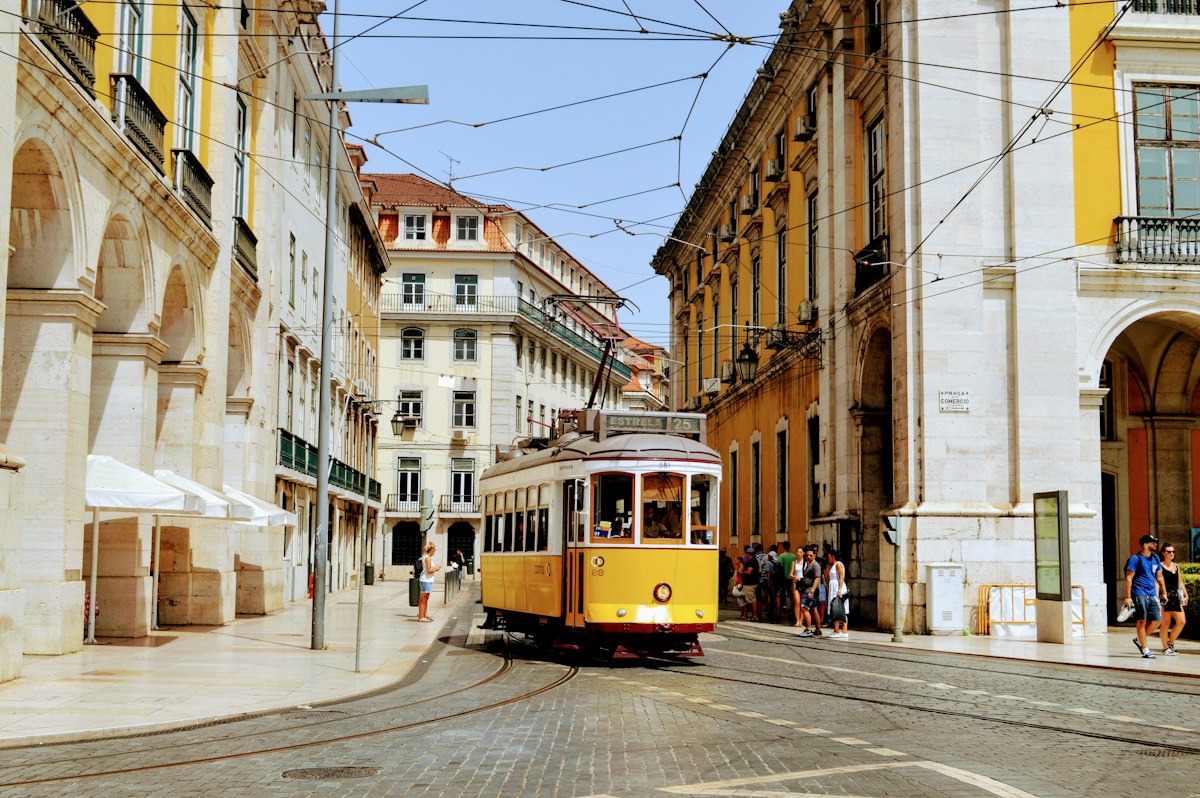
Tram 28 is a tourist trap. Yes, it's iconic and scenic, clinking through steep neighbourhoods and past viewpoints. But it's packed with tourists paying €3 per ride. Better strategy: ride it early morning (before 8am) when it's semi-empty, or skip it entirely and walk those neighbourhoods instead — you'll see far more and avoid crowds.
Walking the seven hills: This is Lisbon's real magic. Plan routes that descend rather than climb. Neighbourhoods like Alfama, Barrio Alto, and Chiado reveal themselves on foot — hidden staircases, small restaurants, street art, and sudden viewpoints. Wear comfortable shoes and carry water.
Ferries to Cacilhas: Cross the Tagus by ferry from Terreiro do Paço or Cais do Sodré (€1.30). It's a 10-minute journey with stunning views of the Ponte 25 de Abril and Mosteiro dos Jerónimos. Cacilhas on the south bank has fish restaurants, local vibrancy, and fewer tourists than central Lisbon.
Bolt and Uber are cheap. For 2+ people or late-night journeys, it's faster than waiting for night buses. Cost to cross the city is typically €8–12.
Culture and etiquette — what most guides skip
Don't confuse Portuguese and Spanish. This is deeply offensive to Portuguese people. They take pride in Portuguese identity and language. If you mix them up, you'll get genuine eye-rolls. Portugal and Spain are neighbours but have distinct histories, languages, and cultures — treat them as such.
Fado etiquette is absolute silence during singing. When you eat at a fado restaurant, singers perform directly at your table. Conversation stops. Phones disappear. Cameras stay away. The entire room falls silent during each song. It's a sacred moment. Only applaud when the singer finishes. Breaking this rule will make locals very uncomfortable.
Pastel de nata is not just a pastry. It's a cultural institution. The original recipe is from the monastery at Belém. Each neighbourhood has its passionate defenders of which bakery makes the best version. Locals will have strong opinions. Eat them warm (just out of the oven), dusted with cinnamon and powdered sugar. They're best in the morning with a coffee.
Café ordering has an unwritten hierarchy: Stand at the counter (balcão) for a quick espresso and you'll pay €0.70–0.90. Sit at a table and the same coffee costs €1.50–2.50. The difference funds the seat and the waiter service. If you want to people-watch and pay table prices, that's fine. But if budget matters, drink standing at the counter like locals do.
Dinner starts late — 8 or 9pm. Restaurants begin serving around 7:30pm, but they're quiet until 9pm. Arriving at 6pm might find you completely alone. This is normal. The city's rhythm is built around late dinners and late nights.
Carrying cash matters. While card acceptance is good in tourist areas, many neighbourhood cafés, small restaurants, and markets prefer cash. An ATM is never far away, but having €20–30 in your pocket avoids friction.
Daily budget (per person)
Hostel or modest guesthouse, café breakfasts and market meals, free attractions (viewpoints, churches, neighbourhoods), metro pass
3-star hotel, mix of neighbourhood restaurants and casual dining, 1–2 paid attractions (monastery, museums), metro pass, occasional wine bars
4-star hotel, multiple restaurant meals daily, fado dinner experiences, all attractions, occasional private tours, premium wine bars, taxis when convenient
Money-saving tips: Lunch menus (pratos do dia) are typically 30–40% cheaper than dinner at the same restaurant and often more generous. Wine is absurdly cheap — excellent bottles from €6–12 in restaurants. Markets like Mercado da Ribeira (central) and Campo de Ourique (local) sell fresh produce, pastries, and prepared meals at tourist-proof prices. Many attractions (like Castelo São Jorge viewpoint platforms) are free or €1–2. Supermarket sandwiches from Pingo Doce or El Corte Inglés are decent for lunch. Day trips (Sintra, Cascais) are expensive; locals question their value — skip unless you have full day and early start.
What most people miss
LX Factory — Hidden behind an unassuming restaurant in Calvário, this graffiti-covered warehouse district houses street art, independent shops, vintage cafés, and zero tourists. Go midweek in the afternoon. It closes early and Sundays are quieter than you'd think for discovery.
Mouraria neighbourhood — East of Alfama, this is where fado was born. Narrow steep streets, fado venues that are real (not tourist traps), local restaurants without English menus, and the Casa do Fadista museum. Completely bypassed by most visitors. Wednesday afternoons are lively with locals.
Jardim da Estrela — An elegant public garden in Bairro Alto with a lake, romantic pathways, and zero crowds. Perfect for a quiet coffee, reading, or morning walk before the city wakes. Locals bring children and dogs here, not tourists. Café inside is simple and good.
Costa da Caparica beach — Twenty minutes south by train from central Lisbon, this long sandy beach has less tourists than Cascais and better local restaurants. Take the train to Caparica station (€1.50), then local bus or walk to the beach. Summer water temperature reaches 21°C.
Parque das Nações — Built for the 1998 Expo, this vast waterfront park is where Lisbon's young people actually spend time. Oceanarium (€15–20), cable car over the park (€5), riverside restaurants, and gardens. Almost no tour groups. Walk along the river until sunset — the light on the water is extraordinary.
Sintra day trip — timing is critical. Sintra (30 minutes by train, €4 return) is beautiful but becomes a crowded tourist zoo by 11am. Go at opening time (9am) on a weekday if possible. Visit Pena Palace first (it gets busiest after noon), then Quinta da Regaleira, then Convent of the Capuchos. Rent bicycles or walk between sites rather than shuttle buses. Return to Lisbon by 3pm to avoid crowd reversal.